

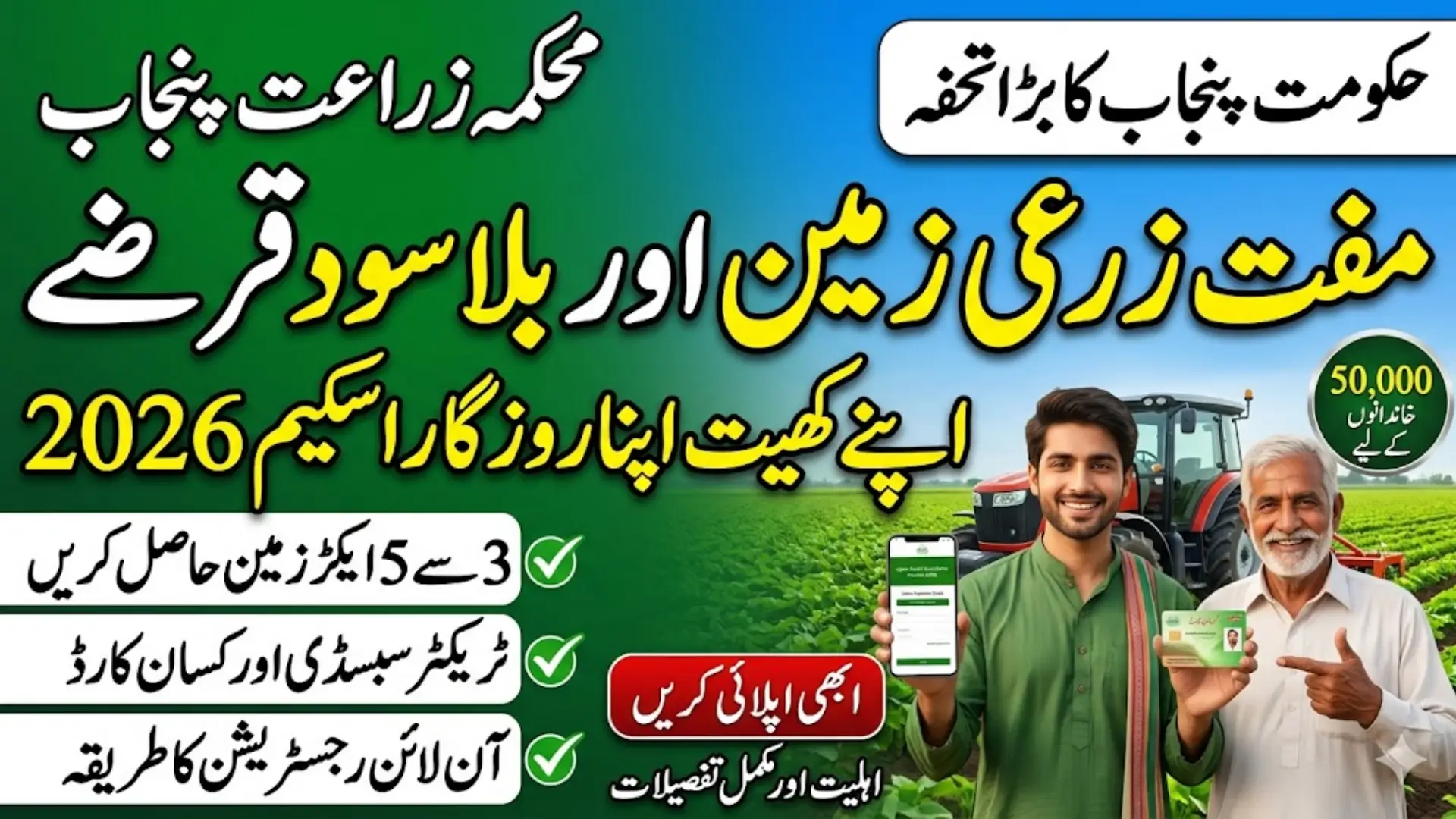
Apne Khet Apna Rozgar Scheme Online Registration
The Government of Punjab has introduced the Apne Khet Apna Rozgar Scheme 2026 as a serious step toward strengthening the rural economy and supporting those who have long remained outside the system of land ownership. In many villages across Punjab, a large number of young people are willing to work in agriculture but do not have access to land or financial resources. This scheme directly addresses that gap by providing agricultural land along with financial and technical support.
From a ground-level perspective, such initiatives are often discussed widely among farmers, especially in South Punjab where landlessness is a common issue. The idea of converting unemployed youth into landowners is not just a policy move but a shift in mindset. Instead of short-term financial aid, the government is focusing on long-term sustainability by creating self-dependent farmers who can contribute to food production and economic growth.
- Focus on landless farmers and rural youth
- Aims to reduce unemployment and poverty
- Encourages modern agriculture practices
- Provides long-term income opportunities
Key Highlights of Apna Khet Apna Rozgar 2026
This scheme is different from traditional programs because it offers a complete support system rather than limited financial relief. The government plans to distribute 3 to 5 acres of land to eligible individuals, ensuring that they have a strong foundation to start their farming journey. In addition, interest-free loans and subsidies are included to reduce the burden on new farmers.
Another major highlight is the integration with existing agricultural support programs like the Kisan Card and tractor subsidy initiatives. These features show that the scheme is not isolated but part of a broader agricultural reform plan. It ensures that beneficiaries not only receive land but also the necessary tools and financial backing to make that land productive.
| Feature | Details |
|---|---|
| Scheme Name | Apne Khet Apna Rozgar 2026 |
| Land Allocation | 3 to 5 Acres |
| Target Beneficiaries | 50,000 Families |
| Loan Type | Interest-Free |
| Machinery Support | Tractor Subsidy up to Rs 1 Million |
| Coverage Area | All Districts of Punjab |
- Free land allotment for eligible applicants
- Interest-free loans for farming needs
- Subsidy on tractors and machinery
- Access to Kisan Card facilities
Step-by-Step Online Registration Method (2026)
The registration process has been simplified to make it accessible for everyone, even those with limited technical knowledge. The government has introduced an online portal where applicants can submit their forms without unnecessary delays or middlemen involvement. This digital system helps reduce corruption and ensures transparency.
Applicants begin by registering with their CNIC and mobile number. After creating an account, they fill out the application form, upload required documents, and submit their farming plan. Once the form is submitted, a tracking number is issued, which can be used to check the application status through the portal or SMS updates.
- Visit the official registration portal
- Register using CNIC and mobile number
- Fill out the application form carefully
- Upload all required documents
- Submit application and receive tracking ID
For those who do not have internet access, District Agriculture Offices are available to assist with the application process, ensuring that no deserving person is left behind due to lack of technology.
Eligibility Requirements You Must Meet
The eligibility criteria have been carefully designed to ensure that the scheme benefits those who truly need support. Priority is given to young individuals who are willing to work in agriculture and build a stable future. The government wants to ensure that the land is utilized properly and not misused.
Applicants must have a valid Punjab domicile and should preferably be landless or own very small land. Financial discipline is also important, as individuals with unpaid bank loans may not qualify. The scheme is inclusive and allows both men and women to apply, promoting equal opportunity.
- Age preference between 18 to 35 years
- Must hold a valid Punjab domicile
- Landless or small farmer preferred
- Should not be a loan defaulter
- Open for both male and female applicants
Documents Needed Before Applying
One of the most common reasons for rejection is incomplete or incorrect documentation. Therefore, applicants should prepare all necessary documents before starting the application process. Proper documentation not only speeds up the process but also increases the chances of selection.
Basic documents include identity proof, contact details, and domicile certificate. In addition, applicants who can provide proof of farming experience or income status may have an advantage during the selection process.
- Valid CNIC
- Punjab domicile certificate
- Passport-size photographs
- Active mobile number
- Bank account details
Supporting documents:
- Affidavit for landless status
- Income certificate
- Proof of farming experience
Complete Application Timeline for 2026
The scheme follows a structured timeline, starting from application submission to final allotment. While the dates may change slightly, it is important for applicants to stay updated through official announcements. Missing deadlines can result in losing the opportunity.
The process includes application submission, verification, scrutiny, and final selection. After the final list is announced, further steps like balloting and land allotment take place.
- Application phase begins in May 2026
- Scrutiny process takes around 10 days
- Appeals are allowed for rejected applicants
- Final list expected in June 2026
Major Benefits for Selected Applicants
The biggest advantage of this scheme is that it provides a complete ecosystem for farming. Beneficiaries are not left alone after receiving land; instead, they are supported through financial aid, training, and access to modern equipment.
The Kisan Card plays a key role by allowing farmers to purchase seeds, fertilizers, and pesticides at subsidized rates. Similarly, the tractor subsidy reduces the cost of heavy machinery, making farming more efficient and productive.
- Free agricultural land for farming
- Interest-free financial support
- Kisan Card for easy purchases
- Tractor subsidy up to Rs 1 million
- Training programs for modern agriculture
How This Scheme Improves Farmers’ Future
If implemented effectively, this scheme can bring a major transformation in rural Punjab. By giving people ownership and responsibility, it encourages them to work harder and invest in their future. Farmers who once worked as laborers can now become landowners.
Such changes not only improve individual lives but also strengthen the overall agricultural sector. Increased production, better resource management, and modern farming techniques can lead to long-term economic stability.
- Boosts agricultural productivity
- Creates employment opportunities
- Reduces poverty in rural areas
- Encourages youth participation in farming
District-Wise Priority and Selection Chances
Although the scheme is available across Punjab, certain districts may receive priority based on land availability. Areas with more government land and higher poverty levels are likely to benefit more in the first phase.
Applicants should understand that selection is not only based on eligibility but also on district quotas. This means that chances of selection may vary depending on the region.
- South Punjab districts may get priority
- Selection depends on available land
- District quota plays a major role
What Happens After Application Submission
Once the application is submitted, the process moves into verification and screening. Authorities carefully review all documents and may conduct field visits to confirm the applicant’s details. This step ensures that only genuine candidates are selected.
Applicants are informed about their status through SMS notifications. Those who are selected proceed to the final stage, where land allotment and documentation are completed.
- Document verification process
- Eligibility screening
- Possible field inspection
- SMS updates for applicants
- Final land allotment procedure
Challenges Applicants Should Understand
While the scheme offers many benefits, there are also challenges that applicants should be aware of. The number of beneficiaries is limited, which means competition is high. Not everyone who applies will be selected.
Additionally, the verification process can take time, and applicants need to be patient. The land provided under the scheme must be used strictly for farming and cannot be sold or rented out.
- Limited number of seats
- Strict eligibility criteria
- Time-consuming verification
- Restrictions on land usage
Important Mistakes to Avoid During Registration
Many applicants lose their chance due to simple mistakes. Entering incorrect information or submitting incomplete documents can lead to rejection. It is important to double-check all details before submitting the application.
Applicants should also avoid relying on agents or middlemen who claim to guarantee selection. The process is completely transparent and based on merit.
- Incorrect CNIC or personal details
- Missing or incomplete documents
- Trusting unofficial agents
- Applying at the last moment
Who Can Get Maximum Benefit from This Scheme
This scheme is most beneficial for individuals who are serious about agriculture and willing to work hard. It is especially useful for landless youth who want to build a stable career in farming.
Families looking for long-term income sources can also benefit from this program. However, it is not suitable for those who are not interested in agriculture or are looking for quick financial gains.
- Landless rural youth
- Small farmers with limited land
- Unemployed individuals
- Families seeking stable income
Official Contact Details and Verification Sources
To avoid misinformation, applicants should always rely on official sources for updates and guidance. The government has provided helpline numbers and an official portal for this purpose.
- Helpline: 0800-15000
- Helpline: 0800-29000
- Official Website: agripunjab.gov.pk
Final Thoughts on Apna Khet Apna Rozgar 2026
The Apne Khet Apna Rozgar Scheme 2026 is a well-planned initiative that goes beyond temporary relief and focuses on long-term development. By combining land ownership, financial support, and modern farming techniques, it creates a complete system for success.
From what is being observed, such programs have the potential to bring real change if implemented properly. For many families, this scheme could be a turning point, offering them dignity, stability, and a chance to build a better future through agriculture.